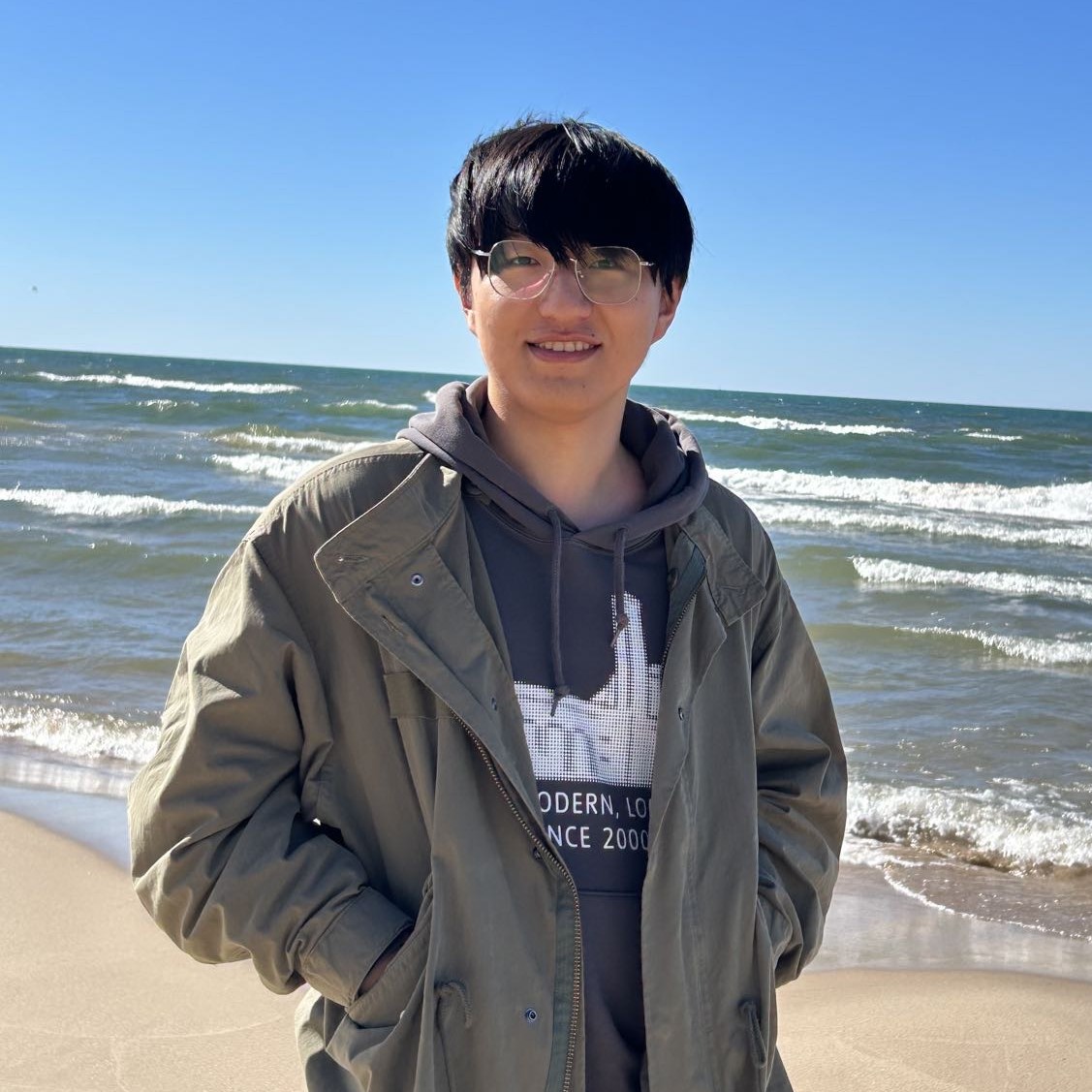
I am a PhD student in Electrical and Computer Engineering at Michigan State University, working with Dr. Xiaobo Tan in the Smart Microsystems Laboratory.
Before joining MSU, I received my M.S. in Artificial Intelligence and B.S. in Automation from Tsinghua University, where I was advised by Dr. Xiangyang Ji. During my master’s study, my research focused on AI for healthcare, including transfer learning with large models and multimodal data fusion. I also worked on generative models, particularly for text-to-motion generation.
🧠 Research Interests
My research aims to enable robots to understand and interact with the physical world through learning-based approaches. My previous work includes vision-based perception for soft robots, where I developed markerless methods for reconstructing the shape of soft continuum robots. I have also worked on generative models for human motion synthesis, focusing on coordinated text-to-motion generation. Currently, my research focuses on robot learning, particularly vision-language-action (VLA) models, imitation learning, and world models for reinforcement learning. I am currently working on several projects in these areas, with papers in preparation for submission.
🔬 Research Skills
- Machine Learning
- World Models for Reinforcement Learning
- Self-Supervised Learning (Contrastive Learning)
- Transfer Learning (Parameter-Efficient Fine-Tuning)
- Generative Models
- Motion Generation (VQ-VAE)
- Action Generation (VAE, Diffusion Policy)
- Robotics
- Teleoperation
- Imitation Learning
- Simulation (PyBullet)
- 3D Reconstruction
- Programming
- Python, C++, C#, Matlab
- Deep learning algorithm development
- Embedded systems (STM32 microcontrollers), Analog–digital circuit systems
📖 Education
- 2024.09 - now, Ph.D student, in Robotics, Michigan State University.
- 2021.09 - 2024.06, M.S. in Artificial Intelligence, Tsinghua University.
- 2017.09 - 2021.06, B.S. in Automation, Tsinghua University.
🔥 News
-
2026.10 – Released the project page for StairVLA: Stage-Aware Hierarchical Action Generation for Vision-Language-Action Models.
-
2025.11 – Our paper “AFT: Appearance-Based Feature Tracking for Markerless and Training-Free Shape Reconstruction of Soft Robots” was accepted to IEEE Robotics and Automation Letters (RA-L).
-
2025.05 – Our paper “Learning-Based Modeling of Soft Actuators Using Euler Spiral-Inspired Curvature” was accepted to MECC 2025.
-
2024.08 – Started my PhD in Electrical and Computer Engineering at Michigan State University, working with Dr. Xiaobo Tan in the Smart Microsystems Lab.
-
2024.05 – Our paper “ParCo: Part-Coordinating Text-to-Motion Synthesis” was accepted to ECCV 2024.
-
2024.03 – Our paper on coronary artery disease prediction using infrared thermography was published in BMJ Health & Care Informatics.
📝 Publications
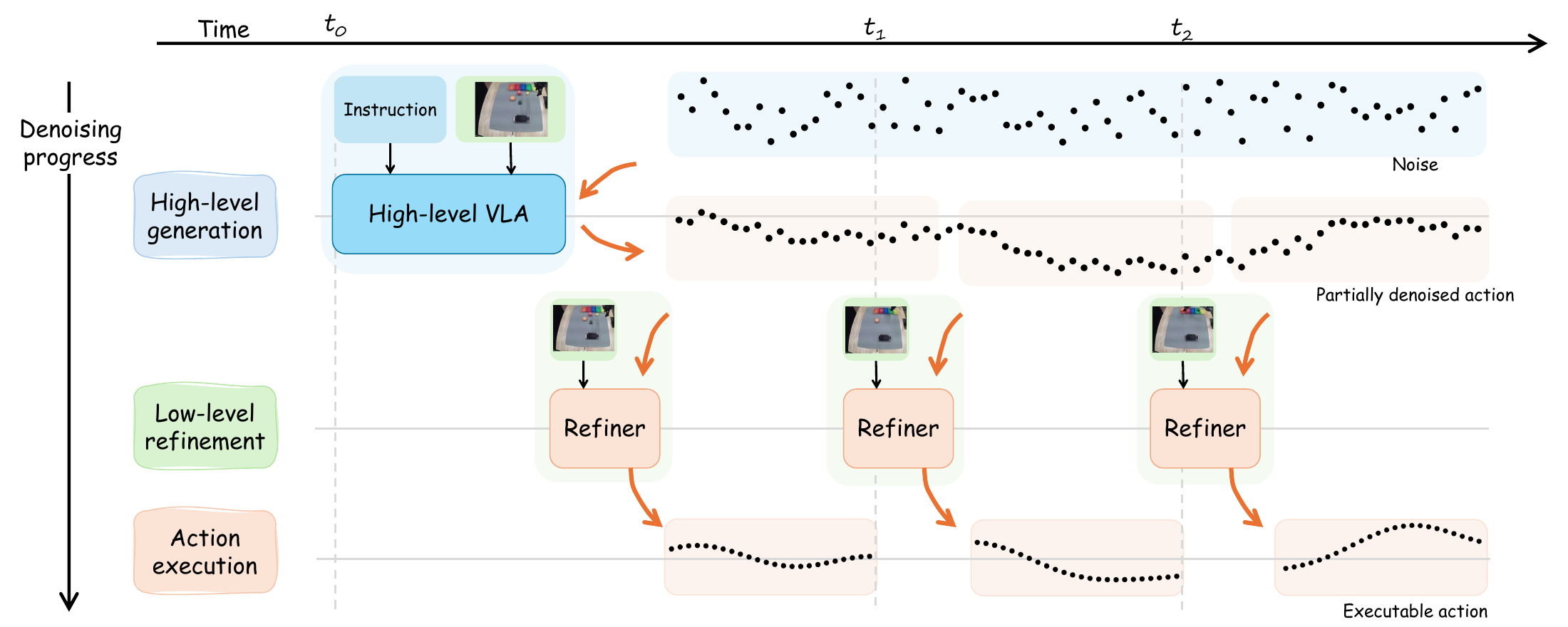
StairVLA: Stage-Aware Hierarchical Action Generation for Vision-Language-Action Models
Shangyuan Yuan, Xinda Qi, Yujiang Pu, Wenliang Guo, Xiaobo Tan
- A high-level VLA produces a reusable, partially denoised long-horizon trajectory, and a lightweight refiner completes each action chunk from the latest observation. On LIBERO, this improves success from 96.5% to 97.8% while cutting latency from 115.0 ms to 44.2 ms per action chunk.
AFT: Appearance-Based Feature Tracking for Markerless and Training-Free Shape Reconstruction of Soft Robots
Shangyuan Yuan, Preston Fairchild, Yu Mei, Xinyu Zhou, Xiaobo Tan
- We propose a markerless vision-based method for reconstructing the shape of soft continuum robots using appearance-based feature tracking, enabling robust and training-free perception of soft robotic deformation.
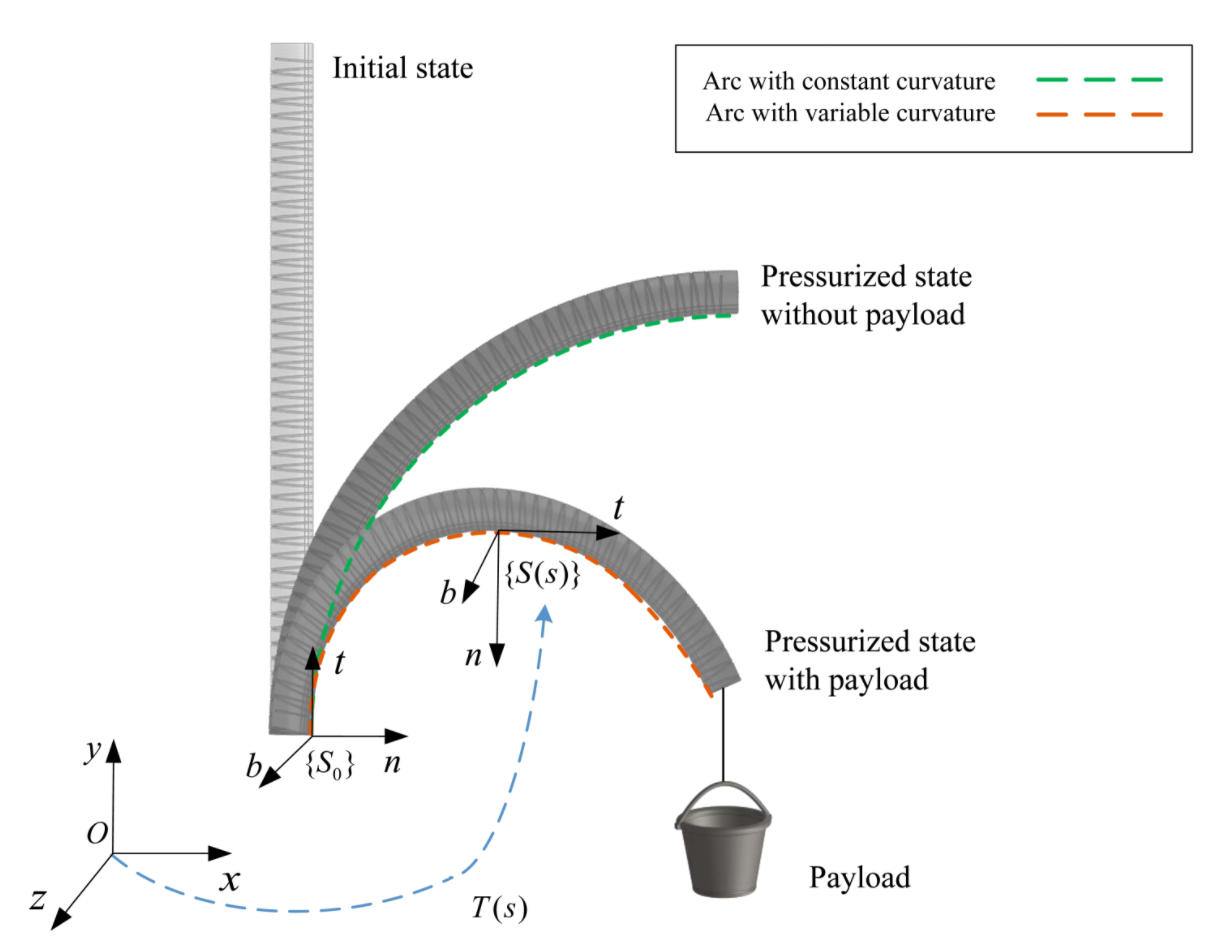
Learning-Based Modeling of Soft Actuators Using Euler Spiral-Inspired Curvature
Yu Mei, Shangyuan Yuan, Xinda Qi, Preston Fairchild, Xiaobo Tan
- A learning-based modeling framework for soft actuators using curvature representations inspired by Euler spirals to better capture deformation dynamics.
ParCo: Part-Coordinating Text-to-Motion Synthesis
Qiran Zou*, Shangyuan Yuan*, Shian Du, Yu Wang, Chang Liu, Yi Xu, Jie Chen, Xiangyang Ji (* Equal contribution)
- A generative framework for text-to-motion synthesis that models coordination between body parts to improve motion realism and controllability.
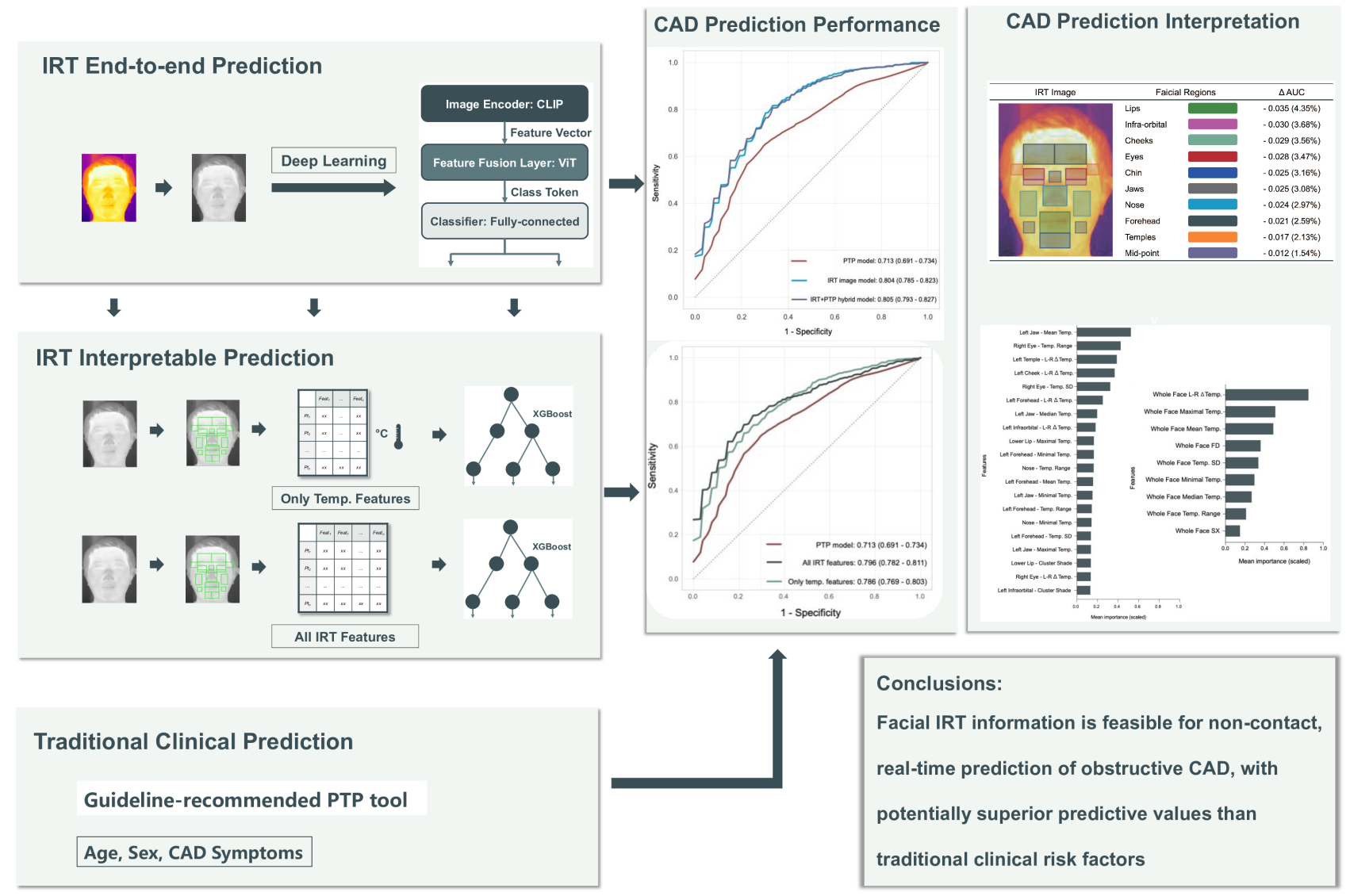
Prediction of Coronary Artery Disease Based on Facial Temperature Information Captured by Non-contact Infrared Thermography
Minghui Kung, Juntong Zeng, Shen Lin, Xuexin Yu, Chang Liu, Mengnan Shi, Runchen Sun, Shangyuan Yuan, Xiaocong Lian, Xiaoting Su, Yan Zhao, Zhe Zheng, Xiangyang Ji
- Predicting coronary artery disease using facial thermal patterns captured through non-contact infrared thermography.
📝 Projects
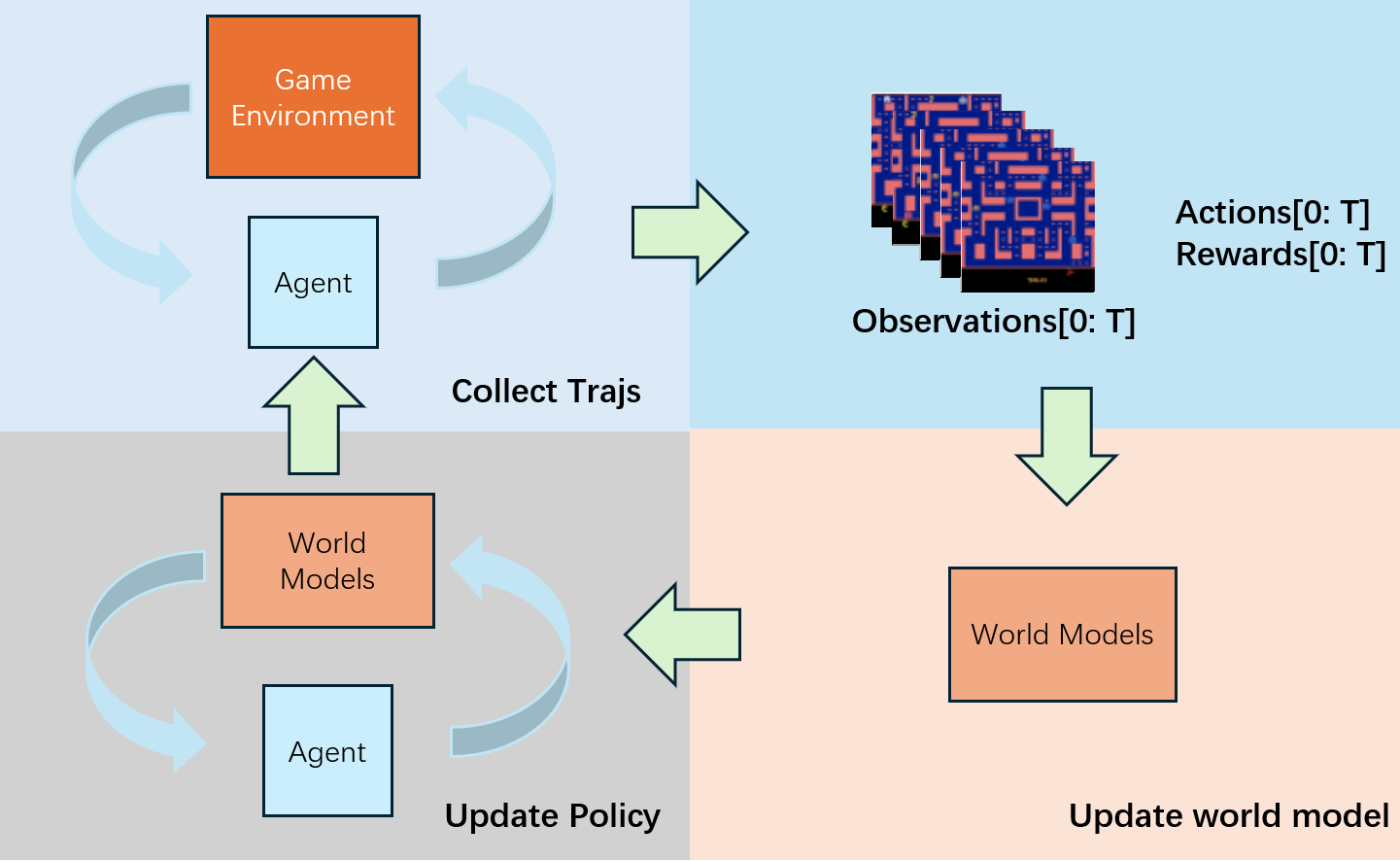
World Models for Atari Games
- Training a world model from scratch to learn Atari game dynamics and enable reinforcement learning through imagination.
- Proposed a reference-conditioned observation generation mechanism that reduces pixel-level memorization and improves dynamics learning.
- Work in progress; a research paper based on this project is currently in preparation.
Learning Intuitive Teleoperation for Heterogeneous Leader–Follower Robot Systems
- Developing a teleoperation system where a rigid robotic arm controls a soft continuum robot.
- Proposed a self-supervised method to automatically align the action spaces between heterogeneous robots.
- The approach is validated in simulation, with real-world experiments on the physical robot system currently in progress.
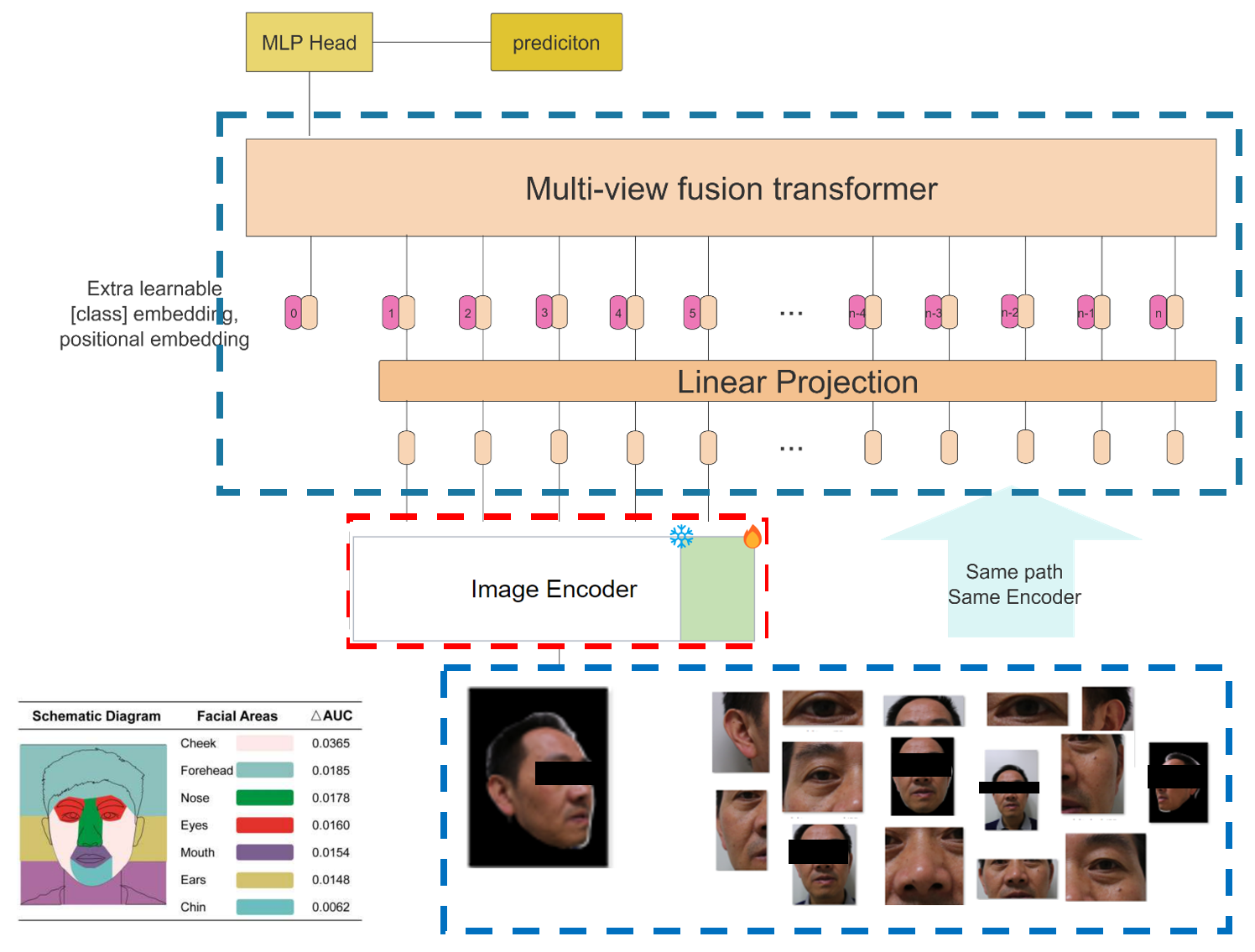
Facial Representation-Based Coronary Artery Disease (CAD) Diagnosis
- Built a multi-camera acquisition array for large-scale facial data collection for medical analysis.
- Implemented multi-view 3D face reconstruction to recover facial geometric structures for physiological feature modeling.
- Applied transfer learning with parameter-efficient fine-tuning (PEFT) to adapt pretrained vision models to medical datasets.
- Developed a multimodal learning framework integrating facial imagery and clinical metadata for CAD prediction.
📫 Contact
Email: yuanshan@msu.edu